Dentures Causing Sore Spots in Mouth: Denture Adjustment Needed
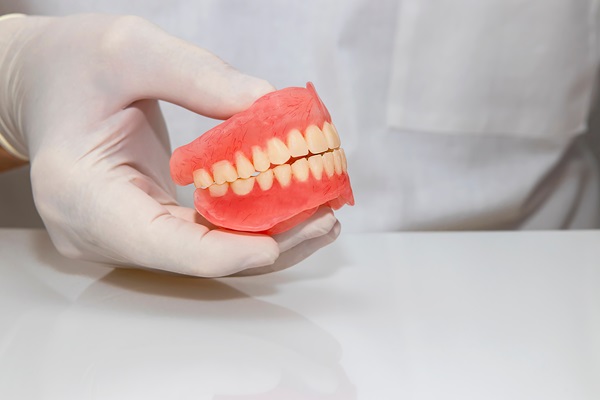
If you have sore spots in your mouth, it might be because your denture is not fitting properly. A general dentist can adjust your dentures in the office. This should alleviate the discomfort you feel. Learn more about getting your dentures fixed.
Denture adjustments for sore spots in the mouth
When patients have sore spots from dentures, dentists perform an examination. The cause of the sore spots must be determined so the dentist can make the proper adjustment. The dentist might need to make a minor adjustment to prevent additional sore spots from forming. However, a reline might be needed to secure the fit. This should prevent the dentures from rubbing against the gums and causing sore spots.
Adjustments for sore spots
People develop sore spots when wearing dentures that are too big for the gums. This causes the dentures to move back and forth against the gums. The friction causes the gums to become sore. The dentist adjusts the areas of the dentures that are overextended past the gums. The dentist then polishes the borders of the dentures. Then the patient can wear dentures without getting sore spots.
Relining for sore spots
Dentures should fit against the gums and evenly distribute pressure. If this does not happen, people will develop sore spots. Dentists usually reline the dentures to fix this problem. While a reline is recommended every two years, people can get this done sooner if needed. Relines are usually recommended after the patient has experienced bone loss that caused the mouth to change in size and shape. With these changes, the dentures no longer fit properly.
Dentists choose between hard and soft relines. Many patients prefer soft relines because of the material used. The soft material is comfortable and less likely to cause sores over time. To complete a soft reline, dentists remove some of the acrylic material from the dentures. Dentists add a putty material to take impressions and then use a liquid polymer to reline the dentures. This soft material makes it easier to adapt to wearing dentures.
The process for a hard reline is similar. However, dentists use a hard material that is similar to the acrylic used for the denture base. A hard reline lasts longer than a soft reline does, but it is not as comfortable. A hard reline is only recommended for patients who have experienced wearing dentures. These patients have already exhibited the ability to wear dentures comfortably as long as they fit correctly. These patients have adapted to the hard materials used for dentures.
Do not live with sore spots from a denture
You might think that having sore spots from a denture is normal, but it is not. You should not have to live with gum soreness. You can get an adjustment or get your dentures relined. Visit a general dentist to find out which procedure is right for you. Then your dentist will adjust your dentures accordingly.
Request an appointment here: https://www.myddsny.com or call Inna Goykman-Amir DDS at (718) 416-6364 for an appointment in our Brooklyn office.
Check out what others are saying about our dental services on Yelp: Dentures and Partial Dentures in Brooklyn, NY.
Related Posts
Tooth loss can make eating difficult, change the way you speak, and affect your self-confidence. Dentures have long helped solve this problem by replacing missing teeth. Moreover, they remain a popular option because they restore the smile in a natural, comfortable way. Learning more about how dentures work and what the process involves can help…
Proper care of dentures ensures a comfortable fit, long-lasting function, and a confident smile. For patients relying on dentures, maintaining oral health extends beyond daily wear—it requires consistent cleaning, timely adjustments, and routine dental evaluations. Understanding the complete denture care plan helps preserve both the appliance and the health of the surrounding tissues.Patients must clean…
Denture adhesives are a great way to keep your removable dentures in place. This guide is designed to help you determine if adhesives for dentures are right for you. A common concern that denture wearers have is that their dentures may come loose at an inopportune time, and denture adhesives offer a way to help…
Choosing implant-supported dentures completely transforms how a smile looks, feels, and functions by offering a remarkably stable alternative for individuals who live with missing teeth. Extensive tooth loss impacts daily life far beyond the visual gaps, changing how people speak, eat, and interact with the world around them. Our general dentist offers this advanced restorative…