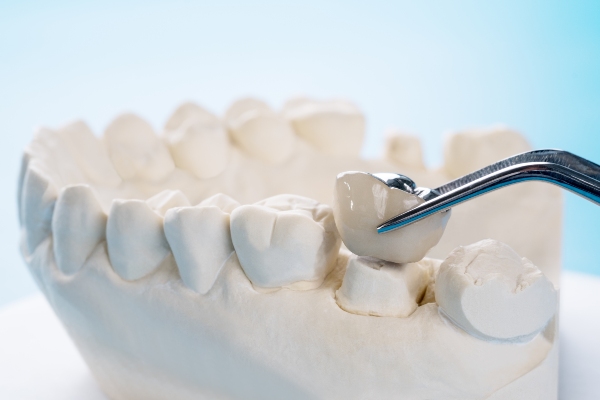
 When severe tooth decay compromises tooth structure, general dentists often recommend dental crowns as an effective restorative solution. Dental crowns play a crucial role in treating advanced decay by providing strength, protection, and improved aesthetics. Unlike fillings, which address minor cavities, dental crowns cover the entire visible surface of a damaged tooth, significantly extending its lifespan and restoring essential functions such as chewing and speaking.
Restoring tooth integrity and functionality
Dental crowns help restore severely decayed teeth by reinforcing their structural integrity. When tooth decay progresses significantly, the affected tooth may weaken considerably, increasing the risk of fracture or complete tooth loss. Placing a dental crown provides a protective cap around the damaged tooth, evenly distributing pressure from biting forces. This restoration significantly reduces stress on the weakened structure, protecting it from further harm.
Patients receiving dental crowns typically experience improved chewing capabilities, as crowns restore the natural shape and size of teeth. By securely fitting over the compromised tooth, dental crowns allow patients to comfortably chew food, alleviating discomfort associated with severely decayed teeth.
Preventing further decay and complications
Severe tooth decay can create deep cavities that leave tooth structures vulnerable to bacteria, causing further deterioration or infection. Dental crowns effectively seal the tooth, preventing bacteria from entering and causing additional decay. This sealed environment also protects sensitive internal structures, minimizing the risk of painful infections and abscesses.
In some cases, dental crowns are placed after root canal treatment. Teeth requiring root canal therapy are often severely decayed, necessitating the removal of infected tissue. Following this procedure, dental crowns reinforce and seal the treated tooth, preventing bacteria from re-entering and securing long-term dental health.
Enhancing cosmetic appearance
Beyond functionality, dental crowns provide notable aesthetic improvements. Severely decayed teeth often exhibit discoloration, noticeable cavities, or uneven surfaces, negatively affecting patients' confidence when smiling or speaking. Dental crowns effectively mask these imperfections, creating a natural, uniform appearance that closely matches adjacent teeth. Materials like porcelain or ceramic are carefully selected and precisely crafted to blend seamlessly with surrounding dental structures.
Long-term oral health and care
One significant advantage of dental crowns is their durability. With proper maintenance, dental crowns frequently last decades, providing long-lasting protection for severely decayed teeth. Patients must maintain regular oral hygiene habits—brushing, flossing, and scheduling routine dental checkups—to ensure the longevity of dental crowns and the continued health of surrounding teeth.
General dentists recommend periodic dental visits to assess crown integrity, monitor oral health, and address potential issues early. Maintaining proper oral hygiene and routine checkups greatly enhances the effectiveness and lifespan of dental crowns, ensuring sustained oral health benefits.
Choosing dental crowns for severe tooth decay
Dental crowns are highly effective solutions for treating severe tooth decay, restoring function, protecting compromised teeth, and enhancing overall dental aesthetics. Patients experiencing extensive tooth decay should consult their general dentist to explore how dental crowns can provide lasting relief and improved quality of life. For more information or to schedule a consultation, call Inna Goykman-Amir DDS at 718-416-6364.
Request an appointment or call Inna Goykman-Amir DDS at 718-416-6364 for an appointment in our Brooklyn office.
Related Posts
A dental crown acts like armor for vulnerable tooth structures, but even the strongest restoration experiences stress over time. Recognizing early warning signs prevents cracks from progressing into fractures that threaten oral health. Here are five that warrant a trip to the general dentist.Prolonged pain or sensitivity is never normal and always indicates an underlying…
Dental crowns and fillings are two of the most common dental restorations. Fillings are effective at restoring teeth with minimal damage, but they have their limitations. For teeth that need more extensive repairs, a dental crown is a top choice. Learning more about the different capabilities of these dental restorations can make it clear why…
Dental crowns help protect weak or damaged teeth and restore the shape, strength, and appearance of the tooth. A dentist may recommend a crown after a large filling, root canal, or injury. Since each patient has different needs, there are many types of crowns to choose from.Porcelain crowns are often chosen for front teeth because…