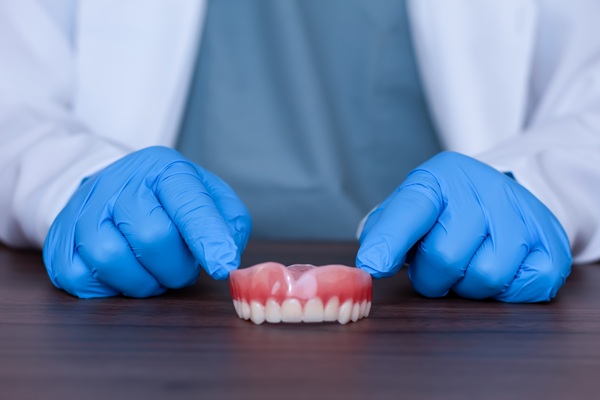
Dentures provide a functional and aesthetic solution for people missing multiple teeth. However, proper denture care is essential to ensuring comfort, durability, and oral health. People with new dentures must establish a consistent cleaning routine and learn how to handle them carefully. Without proper maintenance, dentures can become uncomfortable, harbor harmful bacteria, or wear out prematurely. The following tips can help you care for your dentures and lead to better long-term outcomes.
The basics of denture care
Daily cleaning routine
A consistent denture care routine keeps appliances clean and maintains their longevity. Using a soft-bristled toothbrush and a denture-specific cleaner helps remove food particles, plaque, and bacteria without scratching the material. Avoid abrasive toothpaste and stiff brushes, as they can damage the surface. Soaking dentures in a specialized cleaning solution overnight prevents drying and helps remove stains, but patients with metal components should consult a dental team for suitable products. In the morning, thoroughly rinsing dentures ensures no cleaning residue remains before wearing them.
Oral hygiene practices with dentures
Even with full dentures, patients must continue practicing good oral hygiene for their gum and oral health. With a soft-bristled brush, brush the gums, tongue, and roof of the mouth to stimulate circulation and remove bacteria. Additionally, rinsing with an antimicrobial mouthwash can reduce the risk of infections.
For those with partial dentures, brushing natural teeth twice a day with fluoride toothpaste can prevent decay and gum disease. Flossing and using an interdental brush help clean areas where food particles may accumulate. Regular dental visits also help ensure the patient's natural teeth and dentures remain healthy.
Denture handling and storage
Dentures are delicate and can break if the patient drops them when they are not in use. Handling them over a soft towel or a sink filled with water provides a cushion if the patient accidentally drops them. When not in use, storing dentures in a container with a mild soaking solution or water can help prevent them from drying out and losing their shape. Be sure not to expose the dentures to hot water, as high temperatures can warp the material.
Maintaining a secure fit
Over time, the patient's gum tissue and bone structure may change, affecting how their dentures fit. An ill-fitting set of dentures may cause discomfort, irritation, or difficulty speaking and eating. Scheduling regular dental visits allows a dental provider to assess fit and make necessary adjustments. If dentures feel loose or cause sore spots and irritation, professional evaluation can prevent further complications.
Denture adhesives may provide temporary stability. However, they should not replace professional adjustments. Using a dentist-recommended adhesive in moderation can improve retention while ensuring easy removal when cleaning them. If dentures no longer fit properly, the patient may need a reline or replacement.
Call us for more denture care tips
Following proper denture care guidelines ensures your new teeth are comfortable and durable. Would you like to learn more about how to care for your dentures? Call our Brooklyn office for more helpful tips and tricks.
Request an appointment here: https://www.myddsny.com or call Inna Goykman-Amir DDS at (718) 416-6364 for an appointment in our Brooklyn office.
Check out what others are saying about our dental services on Yelp: Denture Care in Brooklyn, NY.
Related Posts
Choosing implant-supported dentures completely transforms how a smile looks, feels, and functions by offering a remarkably stable alternative for individuals who live with missing teeth. Extensive tooth loss impacts daily life far beyond the visual gaps, changing how people speak, eat, and interact with the world around them. Our general dentist offers this advanced restorative…
Taking the time to search online to find a dentist who accepts your insurance plan saves you time, money, and stress. Choosing an in-network general dentist means your insurer negotiates fees directly with the practice, typically leading to lower out-of-pocket costs for routine dental care, from preventive exams to restorative treatments.A dental insurance plan may…
When treating a damaged tooth, patients commonly choose between dental fillings and crowns to restore function and appearance. Dental crowns are especially valuable when extensive damage compromises tooth integrity. Understanding the differences between these two restorative options helps patients make informed decisions about maintaining optimal oral health.Dental fillings repair teeth damaged by decay, cavities, or…
A sudden toothache, broken tooth, or swollen gum can turn an ordinary day into a stressful situation, making an emergency dentist an important resource. Some dental concerns can wait for a scheduled visit, but others need fast care to relieve pain and protect the tooth. Knowing what counts as a dental emergency can help patients…