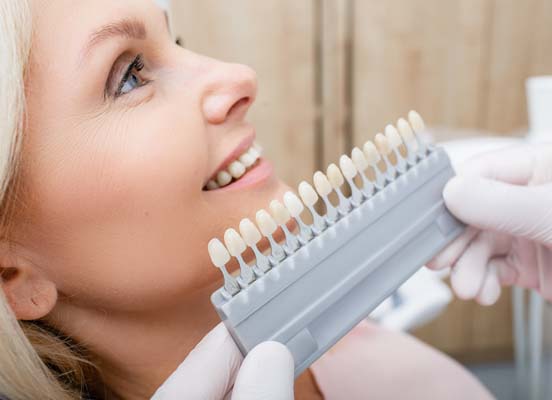
There are numerous reasons a dentist may recommend veneers to a patient. For some, it is a cosmetic option that results in a whiter, more even smile. For others, veneers can be used to repair chipped or cracked teeth for durable and natural-looking results. This popular treatment option is usually made from either composite resin or porcelain. Understanding each option can help patients make the right decision for their dental health.
Dental veneer materials
Regardless of the chosen material, all dental veneers are crafted into thin coverings that are permanently attached to the front of the affected teeth. Patients can choose between porcelain and composite based on preferences and needs. The same type of care is required for both to maintain durability and overall dental health. All types of dental veneers require:
- Careful, consistent brushing and flossing on a daily basis
- Routine dental checkups and cleanings every six months
- Avoiding foods that can stain the materials, such as beets, red wine, and coffee
- Eliminating habits that can damage veneers, such as chewing on foreign objects
Failure to practice proper care can cause porcelain and composite veneers to stain, chip, crack, or come loose.
Porcelain
This type of veneer tends to have the most natural appearance as a finished product, making it a popular choice for both cosmetic and repair treatments. Porcelain, also referred to as ceramic, reflects light naturally and is particularly resistant to staining, making it an excellent long-term solution. In general, porcelain veneers are very strong and can last anywhere from 10 to 20 years with good hygiene and health.
Applying porcelain veneers
First, the dentist will prep the affected teeth by removing the outer enamel layer. Next, impressions are made to create coverings that are customized to fit the patient's unique smile. It can take a few weeks for production so temporary veneers may be placed during this time. Once the veneers are finished, the dentist will permanently bond each covering to each tooth. Finally, the dentist will reshape and polish as needed to achieve the desired results. Due to the nature of the application process, treatment with porcelain veneers is irreversible.
Composite resin
Veneers made of this material can still create a beautiful finished product. However, composite materials are less durable and last only five to seven years. The application process for composite veneers is less invasive and may work well for some patients. In addition, composite resin is much easier to repair than porcelain. With no enamel removal required, a dentist will apply a pliable version of the material to the teeth and then set it with a high-intensity dental light. Then, the veneer is polished and shaped to appear like the natural covering of a healthy tooth.
Conclusion
While there are pros and cons to each option, a dentist can help recommend which material is right for a patient's dental needs. Whether you choose porcelain or composite, you can enjoy a functional and more beautiful smile with dental veneers.
Request an appointment here: https://www.myddsny.com or call Inna Goykman-Amir DDS at (718) 416-6364 for an appointment in our Brooklyn office.
Check out what others are saying about our dental services on Yelp: Dental Veneers and Dental Laminates in Brooklyn, NY.
Related Posts
Dental veneers give patients a way to transform their smiles, providing benefits that reach far beyond whiter teeth in photos. A dentist can use these thin, custom shells to correct several concerns at once, from chips and gaps to worn edges and uneven color. So while many people think of veneers only as a cosmetic…
Dental veneers are a popular cosmetic solution for people looking to improve their smile, but not every person is an ideal candidate. Before moving forward with dental veneers, it helps to understand the procedure, maintenance, and potential results. Asking the right questions not only helps make the process go smoothly, but also helps patients become…
With dental veneers, a dentist can change the tooth’s size, color, and length by attaching these tiny porcelain pieces to its surface. Veneers are a popular solution for many cosmetic dental problems, including chipping, gaps, and discoloration. Although porcelain veneers are a sturdy and durable choice, they require proper maintenance to last long.Dental veneers will…
You can cover up imperfections in your teeth with dental veneers, thin shells of porcelain that fit over your teeth, and bond to them. Veneers can last for at least a decade, but they typically need to be replaced occasionally if a dentist must treat underlying tooth decay or gum disease. Veneers can also stain;…