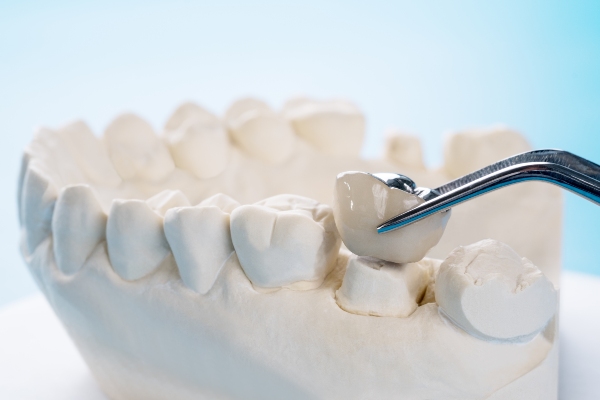
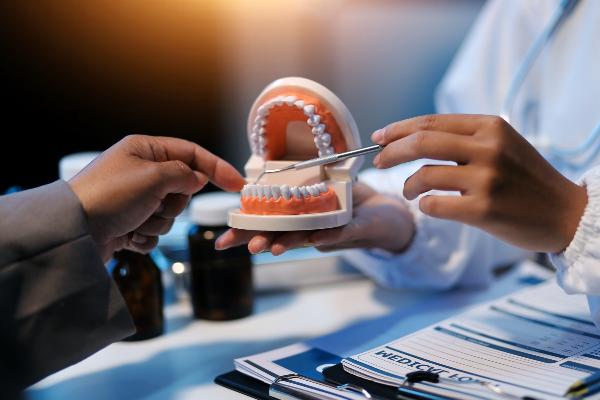
 A dental crown often becomes the treatment of choice when a tooth requires reinforcement, aesthetic improvement, or coverage after root canal therapy. Because a dental crown envelopes the visible portion of a tooth, it restores strength, shape, and shine while allowing normal chewing function. Understanding each procedural step eases anxiety and improves long-term results.
Comprehensive examination and treatment plan
Every successful restoration begins with a thorough clinical evaluation and digital X-rays. The general dentist checks for decay, periodontal health, and bite alignment to verify that a dental crown is the most effective solution. When alternative treatments, such as onlays, inlays, or large fillings, still provide adequate support, those options receive discussion. If a dental crown offers the most predictable outcome, the dentist explains the material choices: porcelain, zirconia, porcelain-fused-to-metal, or gold. They will then confirm the shade selection to achieve seamless blending with the surrounding teeth.
Tooth preparation
After applying a topical gel and local anesthetic, the dentist shapes the tooth into a uniform cylinder, removing weakened enamel and creating space for the crown's thickness. Careful reduction preserves as much healthy structure as possible while creating smooth, tapered margins that support a tight seal. High-volume suction and water spray maintain visibility and protect soft tissues throughout the preparation process.
Precision impression or digital scan
Once the tooth reaches ideal dimensions, the dentist captures its exact form. Many offices now employ intraoral scanners that generate a three-dimensional model in seconds, eliminating the need for gooey impression material. Traditional silicone impressions remain reliable when scanners are unavailable. Either method records fine details of the prepared tooth and adjacent structures, ensuring the future dental crown fits precisely without a gap.
Placement of a temporary dental crown
Considering that the custom crown must be fabricated in an outside lab, the dentist will create a temporary crown, typically made of composite or acrylic materials, to protect the prepared tooth during this time. This temporary restoration covers exposed dentin, maintains gum contour and prevents neighboring teeth from shifting. The dentist uses temporary cement, which allows for easy removal while providing adequate retention for everyday activities. Patients receive instructions to avoid sticky foods and to floss using a sliding motion rather than lifting straight up to prevent dislodgement.
Laboratory fabrication and quality checks
As mentioned, an outside laboratory is necessary to fabricate a dental crown. They use the impressions or scans the dentist provides from the aforementioned consultation. The lab features computer-aided milling technology that produces crowns from the patient's chosen material. Some may also have layered porcelain systems that provide lifelike translucent aesthetics for the front teeth. After fabrication, the lab sends the crown to the dentist, who inspects the fit, margin accuracy, and shading before calling the patient to schedule their final appointment.
Final placement and bite adjustment
During the second appointment, the dentist removes the temporary restoration, cleans the tooth, and tests the fit of the custom crown without bonding. If minor adjustments are necessary, the dentist can make them. However, if the patient's bite is too abnormal or uncomfortable, they will return the crown to the dental lab, which is a rare occurrence. Once the patient and dentist are satisfied with the fit and bite, the dentist will use a dental cement or bonding solution to secure the dental crown in place.
Call us for more information
Placing a dental crown is not difficult, but it requires multiple appointments. If you have a vulnerable tooth or want more information on dental crowns, contact our office. Our team is ready to schedule an appointment or answer any questions you may have.
Request an appointment or call Inna Goykman-Amir DDS at 718-416-6364 for an appointment in our Brooklyn office.
Related Posts
A dental crown acts like armor for vulnerable tooth structures, but even the strongest restoration experiences stress over time. Recognizing early warning signs prevents cracks from progressing into fractures that threaten oral health. Here are five that warrant a trip to the general dentist.Prolonged pain or sensitivity is never normal and always indicates an underlying…
Dental crowns and fillings are two of the most common dental restorations. Fillings are effective at restoring teeth with minimal damage, but they have their limitations. For teeth that need more extensive repairs, a dental crown is a top choice. Learning more about the different capabilities of these dental restorations can make it clear why…
Dental crowns help protect weak or damaged teeth and restore the shape, strength, and appearance of the tooth. A dentist may recommend a crown after a large filling, root canal, or injury. Since each patient has different needs, there are many types of crowns to choose from.Porcelain crowns are often chosen for front teeth because…