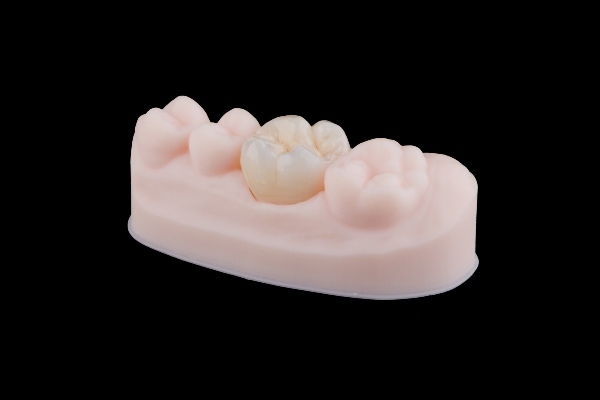
 While dental crowns can last for years with proper care, there are several reasons why they may fall off prematurely, including eating sticky foods and experiencing dental trauma. Make sure to see a general dentist to have the dislodged crown replaced as soon as possible. However, knowing what to do right after it falls off can reduce severe discomfort, prevent further damage, and make for a smoother experience at the dental office.
What to do when your dental crown falls off
When a dental crown falls off, protecting the tooth underneath becomes the immediate priority. The exposed tooth may be sensitive to temperature, pressure, or certain foods, and leaving it unprotected increases the risk of damage or infection. If possible, the patient should try to retrieve the dislodged crown, rinse it gently with water, and store it in a clean container.
In some cases, the crown may be reattached until the patient can see a general dentist. This is typically the case if the dislodged crown is intact and the underlying tooth is in good condition. Over-the-counter dental cement or temporary crown adhesive can be used as a short-term measure to help protect the area. However, it is important to remember that this should only serve as a temporary solution until professional care is available.
Patients should call the dentist’s office immediately after the crown falls off. The dentist and their staff can provide further advice and schedule an appointment for a professional repair or replacement. Sometimes, it is safe to wait until the next dental checkup. At other times, the patient will need to come in sooner for treatment. The ultimate goal is to restore the tooth effectively and prevent further damage to the crown or underlying tooth.
What if my temporary dental crown falls out?
If a temporary dental crown becomes dislodged, it should be kept clean and brought to the dental office as soon as possible. Using a small amount of temporary adhesive from a pharmacy may help hold it in place briefly. Nevertheless, a general dentist must evaluate the fit and determine whether re-cementing or replacing it is necessary. This typically depends on how much longer there is until the permanent crown is ready.
What not to do after a dental crown falls out
Individuals should avoid certain activities to reduce the risk of damage or discomfort when a dental crown falls out. For example, attempting to glue the crown back in place using household adhesives is not recommended; these substances are not safe for use in the mouth and can complicate future treatment. Additionally, they should avoid chewing on the affected side, especially with overly hot or cold foods, to prevent irritating the exposed tooth and surrounding tissues.
More importantly, do not put off talking to a dentist about a dislodged dental crown. Ignoring the situation or delaying an appointment may lead to further deterioration of the tooth structure, especially if decay or fractures are present. The longer the tooth remains unprotected, the greater the likelihood of requiring more extensive treatment.
See a general dentist for a new dental crown
Proper first aid for a dislodged dental crown makes for easy replacement. For optimal results, we recommend contacting a general dentist as soon as possible. They can provide guidance on when to visit the office for a repair or replacement crown. Reach out to the Inna Goykman-Amir DDS for more information.
Request an appointment or call Inna Goykman-Amir DDS at 718-416-6364 for an appointment in our Brooklyn office.
Related Posts
When treating a damaged tooth, patients commonly choose between dental fillings and crowns to restore function and appearance. Dental crowns are especially valuable when extensive damage compromises tooth integrity. Understanding the differences between these two restorative options helps patients make informed decisions about maintaining optimal oral health.Dental fillings repair teeth damaged by decay, cavities, or…
Dental crowns are one of the most effective restorative solutions for cracked or fractured teeth. These custom-fitted caps strengthen damaged teeth, restore normal function, and protect against further complications. Dental crowns offer a reliable and long-term option to preserve the natural tooth structure and maintain a healthy smile when a tooth is compromised due to…
When severe tooth decay compromises tooth structure, general dentists often recommend dental crowns as an effective restorative solution. Dental crowns play a crucial role in treating advanced decay by providing strength, protection, and improved aesthetics. Unlike fillings, which address minor cavities, dental crowns cover the entire visible surface of a damaged tooth, significantly extending its…